

Breathing trainers are available for the respiratory muscles, for exhalation, for loosening secretions, and for CO₂ tolerance. But if you want to increase your endurance, reduce stress, or avoid hyperventilation, there’s one thing you need first: your own breathing—the most immediate and, at the same time, the most thoroughly studied tool.
In this guide, you’ll learn what breathing exercises and breathing trainers actually train, how you can use the Buteyko Method and the control pause to train your CO₂ tolerance, and when a breathing trainer can be a useful addition to your breathing practice in daily life or sports. You’ll also get six exercises with step-by-step instructions, along with the relevant research for each section, so you can distinguish between what’s backed by evidence and what isn’t.
Breathing Trainers & Exercises: What Breathing Training Actually Trains
The transition from unconscious breathing to deliberate control is the first step toward greater recovery. Strictly speaking, a breathing exercise is an active stimulus for a conscious change in breathing patterns—such as breathing more slowly, more shallowly, with pauses, or deliberately through the nose rather than the mouth. However, those who wish to optimize their breathing patterns over the long term often turn to a specialized breathing trainer in practice.
A breathing trainer is essentially a device that guides your breathing in a specific direction, such as by increasing resistance during inhalation, prolonging exhalation, applying mechanical vibrations to the airways, or altering the composition of the air you breathe. What is trained depends on the chosen approach. Such a device applies targeted stimuli to the respiratory muscles or respiratory biochemistry to strengthen the respiratory muscles or alter the breathing pattern and the response to CO₂, while classic breathing exercises without devices serve as a foundation.
Generally, there are two distinct approaches, which are further broken down into four device groups below:
- Mechanical breathing trainers (inspiratory & expiratory strength): These devices use adjustable resistance levels. When inhaling or exhaling, the respiratory muscles—particularly the diaphragm and the intercostal muscles—must work against resistance. This strengthens the respiratory muscles. Exhalation trainers with adjustable resistance also prolong exhalation, thereby calming the breathing pattern.
- Biochemical (CO₂ stimulus) breathing trainers: These devices do not alter the resistance but rather the inhaled air: it is enriched with carbon dioxide in measured doses. This trains the respiratory center’s response to CO₂, that is, the control of breathing rather than the muscles themselves.
Buteyko Breathing & Other Breathing Exercises Without Equipment
“Buteyko” is a well-known term in respiratory therapy. Buteyko breathing itself can be traced back to the Ukrainian physician Konstantin Buteyko, who developed it beginning in the 1950s. His basic premise was that many people consistently breathe more than their metabolism requires. This overbreathing lowers the carbon dioxide level in the blood, and a CO₂ level that is too low constricts blood vessels and airways, making it harder for oxygen to reach the tissues. The breathing exercises of the “Buteyko Method” therefore focus on nasal breathing, a reduced breathing volume, and controlled breathing pauses.
Simply put, this means that with the Buteyko breathing technique, you breathe more calmly in everyday life, thereby keeping your CO₂ level within the normal range. As a proven method, it can help prevent hyperventilation and establish a calmer breathing pattern.
The Cochrane review on breathing exercises for asthma summarizes 22 studies involving 2,880 adults and concludes that breathing exercises likely improve quality of life and reduce symptoms of hyperventilation. There is no evidence that the Buteyko breathing method increases endurance performance in healthy athletes. However, its benefits for promoting a calmer breathing pattern have been established.
The Buteyko Method: The Three Basic Principles for Your Daily Life
As an approach to optimizing breathing patterns, the Buteyko Method focuses on biochemical balance. Anyone who wants to correct their breathing patterns using the Buteyko breathing technique relies on the three essential pillars of the Buteyko Method for daily practice:
- Consistent nasal breathing: Breathe exclusively through the nose day and night to filter and warm the air and naturally increase breathing resistance.
- Gentle breath reduction: Conscious, slight under-breathing to create a minimal sensation of air hunger. This teaches the brain to tolerate higher CO₂ levels.
- Relaxation of the respiratory muscles: Reducing unnecessary tension in the chest and shoulders.
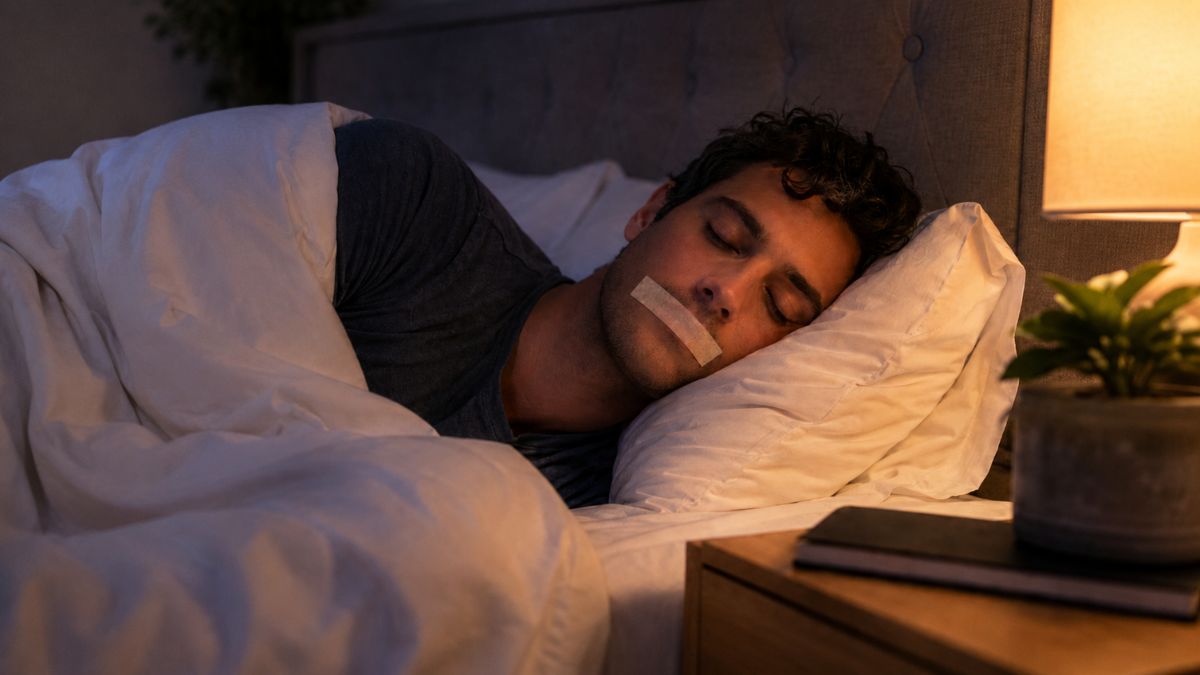
Recommended reading: To learn in detail how gently taping your lips at night can strengthen your nasal breathing and reduce snoring, check out our blog post “Mouth Taping: How It Can Support the Transition to Nasal Breathing & Sleep.”
Buteyko Method: Measuring the Control Pause + 3 Exercises to Get Started
The Buteyko Method itself always begins with a measurement known as the “control pause.” It shows how strongly your respiratory center reacts to rising carbon dioxide levels.
Here’s how to measure your control pause:
- Sit down and relax, then breathe in and out normally through your nose
- After a completely normal exhalation, close your nose with two fingers and start the timer
- At the first distinct urge to breathe, release your fingers and inhale
The number of seconds until then is your reading. - Your first breath afterward should be calm.
If you have to gasp for air, you held your breath too long.
Proponents of this method use the following as a guide:
Under 10 seconds is noticeable, 20 seconds is good, 40 seconds is very good.
By gradually training your CO₂ tolerance, you reduce the sensitivity of your respiratory drive and help your body breathe calmly and efficiently, even under stress.
Three specific breathing exercises from the Buteyko Method:
Breathing Exercise 1) Reduced Breathing in Everyday Life:
- Sit upright with one hand on your abdomen
- Breathe through your nose so that your breathing feels slightly shallow—a gentle sense of shortness of breath, but no stress
- Hold for 3 to 5 minutes
If the sensation of not getting enough air becomes too strong, breathe normally for a moment and then resume the exercise.
Breathing Exercise 2) Clear the nose by gently holding your breath:
- Exhale normally, pinch your nose shut, and slowly nod your head or turn it from side to side until you feel a clear urge to breathe
- Release and continue breathing through your nose, even if it feels tight at first
- Repeat after one minute, up to six times
Breathing Exercise 3) Taking Breathing Breaks While Walking:
- After exhaling normally, pinch your nose shut and walk until you feel the breath impulse
- Count your steps, then breathe calmly through your nose for one minute
- Six to eight repetitions
Over time, the number of steps will increase while the sensation remains the same.
Optimize your breathing pattern with personalized guidance and analysis:
Are you unsure whether your breathing pattern is even the problem, or are you wondering why your control pause just won’t increase despite regular breathing exercises?
One-on-one breathing training with Roman Gruber, based on an individualized analysis, is significantly more effective than unstructured practice. During your session, we’ll examine your breathing patterns, nasal breathing, respiratory rate, and CO₂ tolerance individually, including a BOLT test and a training plan tailored to your daily life, sports, or specific recovery goals.
3 More Breathing Exercises Without Equipment for Training, Recovery, and Everyday Life
In fact, structured breathing exercises can be integrated into any daily routine without taking up much time. However, consistency is, of course, crucial for achieving lasting changes in the nervous system and metabolism. And since you don’t need any equipment for the following breathing exercises, you can get started right away. They complement the Buteyko exercises described earlier and are a great way to prepare for device-based breathing training in our next section.
Here are 3 versatile breathing exercises that require no equipment:
Breathing Exercise 1) Nasal Breathing During a Relaxed Run:
Choose a pace that allows you to keep your mouth closed without it becoming uncomfortable.
- If you have to open your mouth, you’re going too fast.
- This exercise trains your breathing volume under exertion, keeps your breathing rate low, and also serves as a reliable pace indicator for base runs. At first, you’ll run significantly slower.
Breathing Exercise 2) Extended Exhalation After Training:
Inhale through your nose for 4 seconds, exhale for 6 seconds, and repeat for 3 to 5 minutes while sitting or lying down.
- This is the simplest way to consciously initiate the transition to recovery. No breathing pauses, no counting to high numbers—which is why it’s also suitable for beginners.
Breathing Exercise 3) Light Breathing Pauses Before Focused Work:
Exhale normally, wait 3 to 5 seconds, and inhale calmly. Repeat 10 times.
- The brief rise in CO₂ calms the breathing pattern without causing shortness of breath. Do not prolong the exercise until it becomes uncomfortable; the stimulus should remain mild.
Targeted training stimuli using a breathing trainer device: resistance, vibration, and CO₂
As we’ve already learned, breathing exercises form the foundation and simultaneously train body awareness. Training with a specialized breathing trainer device picks up exactly where breathing alone all too often reaches its limits. Specifically, this involves applying a fixed resistance to the respiratory muscles, a reproducible rhythm for exhalation, or a controlled CO₂ stimulus that you don’t have to generate by holding your breath.
Four device categories largely cover the market in this regard:
- Inhalation resistance trainers: Here, you breathe against a spring-loaded valve system. Such a valve opens only once a certain pressure is reached. This trains the diaphragm and intercostal muscles, just as a dumbbell trains the biceps.
- Exhalation trainers: These devices use adjustable resistance to slow down exhalation, thereby gently and controlledly prolonging it. The goal here is a calmer and slower breathing pattern.
- Oscillating devices: In these devices, a ball or valve interrupts the airflow in rapid succession. The vibration generated is intended to loosen secretions in the airways, which is why these devices are primarily used for medical purposes and are less suitable for performance training.
- CO₂ breathing trainers: A CO₂ breathing trainer is used to enrich the inhaled air with carbon dioxide in measured doses. This trains the respiratory center’s response to CO₂.
Scientific evidence from sports physiology:
The first group has been studied most extensively. A systematic review with a meta-analysis by a research group led by Bahareh HajGhanbari (HajGhanbari et al., Journal of Strength and Conditioning Research 2013) found measurable improvements in time trials, exercise duration to exhaustion, and the Yo-Yo test among athletes following respiratory muscle training.
A second meta-analysis by the Swiss research team led by Sabine K. Illi (ETH Zurich) involving healthy adults reached the same conclusion and added an important point: the less fit a person is, the greater the effect. This systematic review was published in the journal Sports Medicine.
How a Modern Breathing Trainer Device Supports Your Training
An effective breathing trainer device, its targeted use, and its benefits are best understood using the example of biochemical breathing trainers. The difference between purely manual practice and device-based support becomes clear in a direct comparison. Therefore, the following side-by-side comparison illustrates how free exercises differ from device-based support.
So while free breathing exercises require you to count the seconds yourself, this tool handles the rhythm completely mechanically and effortlessly.
Research on hyperventilation shows why the CO₂ stimulus matters at all. Breathing too quickly or too deeply lowers CO₂ levels, typically resulting in dizziness and tingling. In a controlled experimental study of 46 participants conducted by Mikołaj Tytus Szulczewski (University of Warsaw), instructing participants to breathe shallowly and naturally halved this drop. And according to a randomized, controlled therapy study with mediator analysis—conducted, among others, with the participation of Alicia E. Meuret, it was shown that in cases of panic disorder, breathing training normalized previously low CO₂ levels, with the improvement preceding the increase in CO₂ levels.
A proven example of this is our Cardihaler from Gruber CO₂-Systems. By gradually enriching the inhaled air with CO₂, the Cardihaler enables controlled breathing training for anyone who wants to build their CO₂ tolerance without having to hold their breath. You start with short sessions at a low level and under guidance. To get started with no obligation, flexible product rental options are also available, allowing you to test high-quality systems in your own daily life.
The “Flutter Breathing Trainer”: Oscillating Devices for the Respiratory Tract
The so-called “Flutter Breathing Trainer” represents a special type of mechanical breathing aid. This medical device is a whistle-shaped unit that uses a metal ball inside the device, which begins to oscillate when you exhale. This oscillation creates vibrating pressure fluctuations in the bronchi, which primarily serve to loosen stubborn secretions in the airways and facilitate breathing. The principle was therefore developed for people with chronic secretion buildup, such as those with bronchiectasis, COPD, or cystic fibrosis.
For healthy athletes, a Flutter breathing trainer is not a training device. It neither strengthens the respiratory muscles to any significant degree nor does it alter breathing patterns. If you’re looking for a device for endurance or recovery, the next section is for you.
Which Gruber breathing training device is best suited for which goal
A high-quality breathing training device is a tool that allows you to reproducibly adjust resistance, rhythm, or CO₂ stimulation. However, there is no one-size-fits-all recommendation for all users, as the choice depends entirely on your individual needs. Below, you’ll learn how our modern training systems are specifically designed and which system supports you in achieving your personal goals.
Focus on Physiology: What a Lung Training Device Actually Trains
As we’ve repeatedly observed in numerous conversations with customers, many athletes and users are specifically looking for a lung training device to increase their endurance. Although the term “lung training device” is widely used, it is inaccurate, because the lungs themselves have no muscles. They therefore cannot be trained as specifically as, say, the thighs or upper arms. In healthy adults, their volume is anatomically limited and virtually unchangeable.
What a lung training device actually trains are two other things: the respiratory muscles—primarily the diaphragm—and the control of breathing, namely its frequency, depth, and response to CO₂.
The effects on the muscles are well documented. In the studies included in the aforementioned meta-analyses, maximum inspiratory pressure and respiratory muscle endurance increased in nearly all investigations. The athletes were also able to sustain exertion for longer periods before becoming exhausted. The mechanism behind this is described as the respiratory metaboreflex: When the respiratory muscles become fatigued, the body constricts the blood vessels in the legs to prioritize blood flow to the respiratory muscles. In cyclists at their performance limit, blood flow in the legs decreased as respiratory work increased (Harms et al., Journal of Applied Physiology 1997). Five weeks of respiratory muscle training measurably weakened this reflex (Witt et al., Journal of Physiology 2007). Stronger respiratory muscles delay the point at which the reflex kicks in. A lung training device thus indirectly helps maintain blood flow to the working leg muscles for longer.
Conclusion: Breathing exercises with device support for noticeable results
Targeted breathing exercises form the foundation for recovery, focus, and resilience. They train your body awareness and help you consciously control your breathing pattern in everyday life. Those who understand the physiological significance of CO₂ quickly learn to establish shallower and calmer breathing patterns to effectively avoid hyperventilation. This lays the groundwork for improved performance and recovery.
At the same time, practicing on your own without aids often reaches its limits in the hustle and bustle of daily life. This is exactly where our products from Gruber CO₂-Systems come in as a supplement. From relieving the mental strain of counting breaths with the Relaxator, to targeted training of CO₂ tolerance with the CardiHaler, to strengthening lip and facial muscles with the FaceFormer, our products take the counting and measuring off your hands and simplify your daily breathing routine.
You can find more posts on this topic in our blog overview.
Important to know:
This breathing trainer guide is intended for performance optimization, recovery, and prevention. In cases of chronic lung disease, asthma, or severe breathing difficulties, self-directed training is in no way a substitute for professional medical diagnosis and treatment.
FAQ: Frequently Asked Questions About Breathing Exercises & Trainers
Breathing Trainer: How Do You Use It Correctly?
A breathing trainer is used while sitting with your upper body upright. For resistance trainers, use a resistance level that allows for ten to thirty smooth breaths; for exhalation trainers, use a setting that noticeably prolongs exhalation without requiring you to strain. One session lasts two to five minutes, once or twice a day. Stop immediately if you feel dizzy. Clean the device after each use and let it dry.
How do you do breathing exercises?
Breathing training consists of three components: a calm breathing pattern in daily life using nasal breathing; targeted exercises such as reduced breathing, prolonged exhalation, or brief breathing pauses; and, optionally, a device that provides resistance or CO₂ stimulation. Ultimately, consistency is key. Five to 10 minutes daily over several weeks yield significantly better results than a few long sessions. You can track your progress using the so-called control pause or the BOLT test.
Which breathing exercises increase CO₂ levels?
All breathing exercises that reduce tidal volume or incorporate pauses increase CO₂ levels. These include, in particular, reduced breathing as practiced in the Buteyko method, short breathing pauses after exhaling, breathing pauses while walking, and nasal breathing during light exertion. Prolonged exhalation also helps because it lowers the respiratory rate. Deep, rapid breathing, on the other hand, has the opposite effect. With all breathing exercises, the increase in CO₂ levels should always remain small and comfortable, as severe shortness of breath is not a sign of a better workout.
How can I train my CO₂ tolerance?
If you want to train your CO₂ tolerance, you can do so either through breathing techniques—such as reduced breathing, breathing through the nose during light exertion and taking brief pauses after exhaling, or by modifying the air you breathe using a CO₂ breathing trainer, which adds a measured amount of carbon dioxide to the air. In both cases, the respiratory center gets used to remaining calm even when CO₂ levels are slightly elevated. Progress is measured using the control pause. However, please perform such breathing exercises with breathing pauses only while seated, and never if you have cardiovascular disease, epilepsy, or are pregnant.
What role does CO₂ play in breathing?
Carbon dioxide is the most important trigger for the respiratory drive: When the CO₂ level in the blood rises, the respiratory center signals a need for air. In addition, CO₂ influences the dilation of blood vessels and the release of oxygen from hemoglobin into the tissues. If the level drops due to breathing too quickly or too deeply, the blood vessels in the brain constrict and oxygen binds more tightly to the blood. This explains the dizziness and tingling sensations associated with hyperventilation.